
Manufacturing
Rebuild the operation around the work on the line.
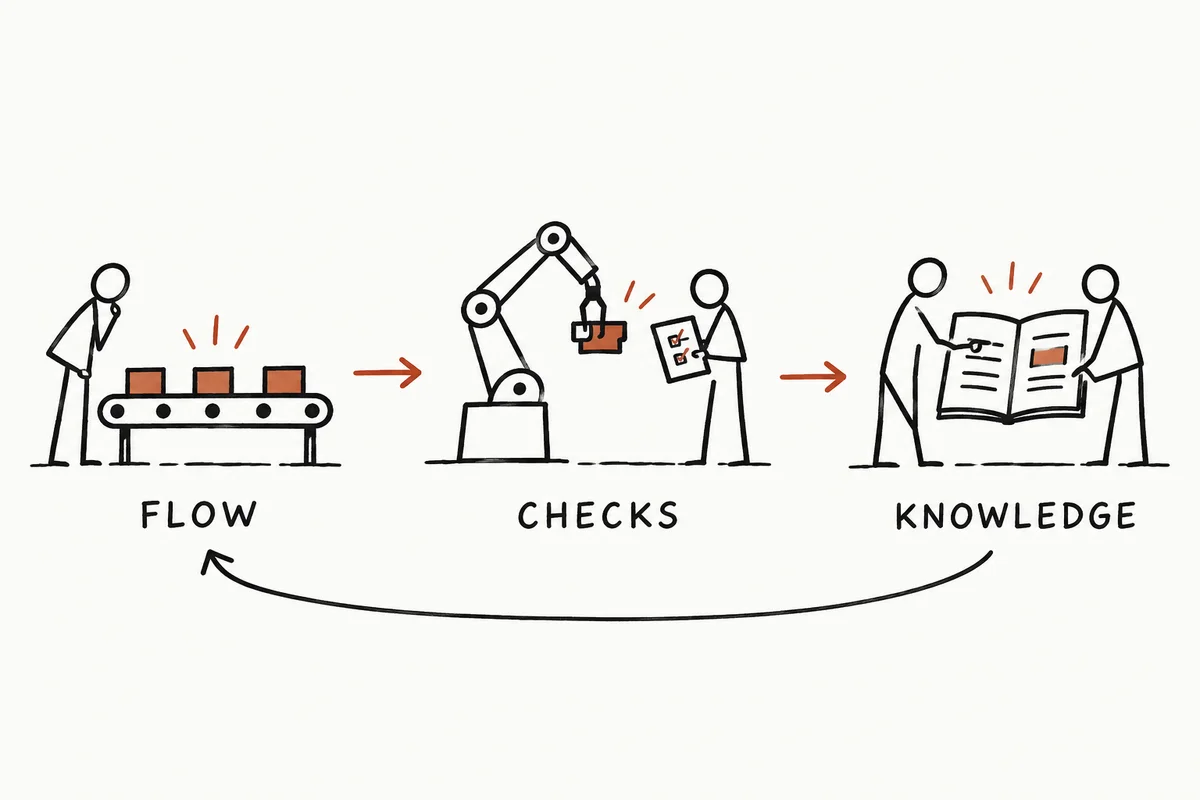
Start with recurring waste, downtime, or a process that depends on a few experienced people. Rebuild Partners examines how the work should change and where AI or robotics may fit.
Who this is for
Plant and operations leaders facing a change in how work gets done.
Start with a production process that is difficult to run consistently, a recurring interruption, or a proposed automation investment whose operating implications are unclear.
The question is what needs to change in the workflow, economics, and responsibilities around the technology. Equipment selection alone does not answer it.
Manufacturing use cases
Make the operating problem specific.
Illustrative situations for an Audit. These are not client case studies or claims of measured results.
- Waste that persists across a process
- Where does material, time, or effort leave the process without creating useful output? Examine the steps, handoffs, and decisions involved before deciding where automation belongs.
- Recurring downtime with unclear ownership
- How is an interruption recognized, escalated, and resolved? Examine the information and responsibility around those decisions, alongside the production constraint itself.
- Operating knowledge concentrated in a few people
- Which settings, exceptions, and workarounds depend on someone being present? Identify what must become explicit for other people to run the process and understand when to intervene.
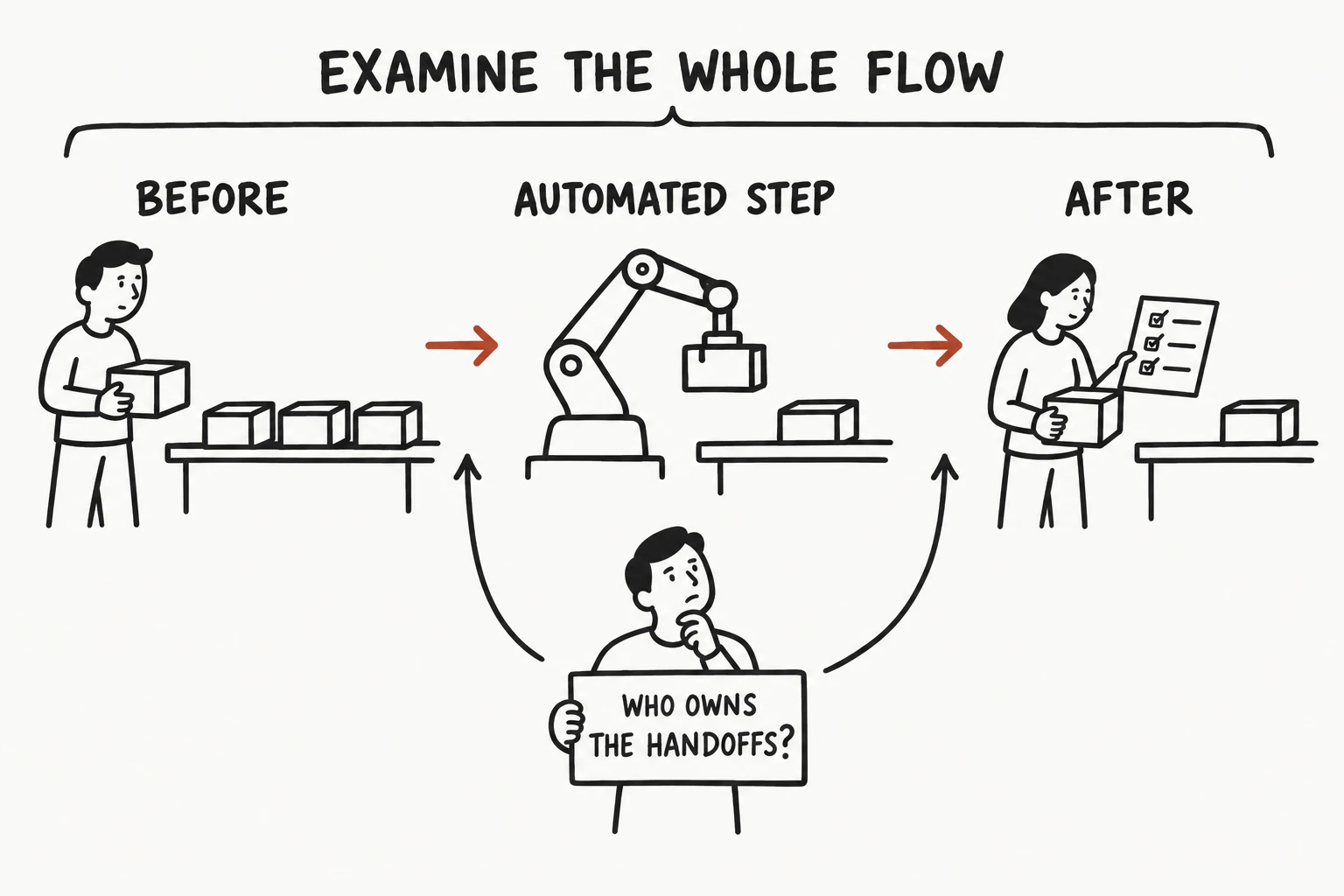
- Robotics entering an existing workflow
- What changes before and after the automated task? Examine handoffs, quality checks, operator responsibilities, and the conditions for stopping or escalating the work.
What the rebuild examines
The line, its economics, and the people who run it.
Audit maps the process, its interruptions, and the decisions around them. It examines the operating impact and whether a rebuild is warranted. Blueprint defines the workflow changes, responsibilities, and sequence. Install and Train follow when the scope and required expertise are established.
The scope needs to distinguish operating redesign from equipment procurement, controls engineering, and machine safety validation. Specialist requirements and responsibilities must be established for the particular plant before implementation is agreed.
Rebuild Partners sells the operating redesign. An implementation bench is a separate delivery role, with its scope determined by the work.
How you buy
Start with a defined process and a fit decision.
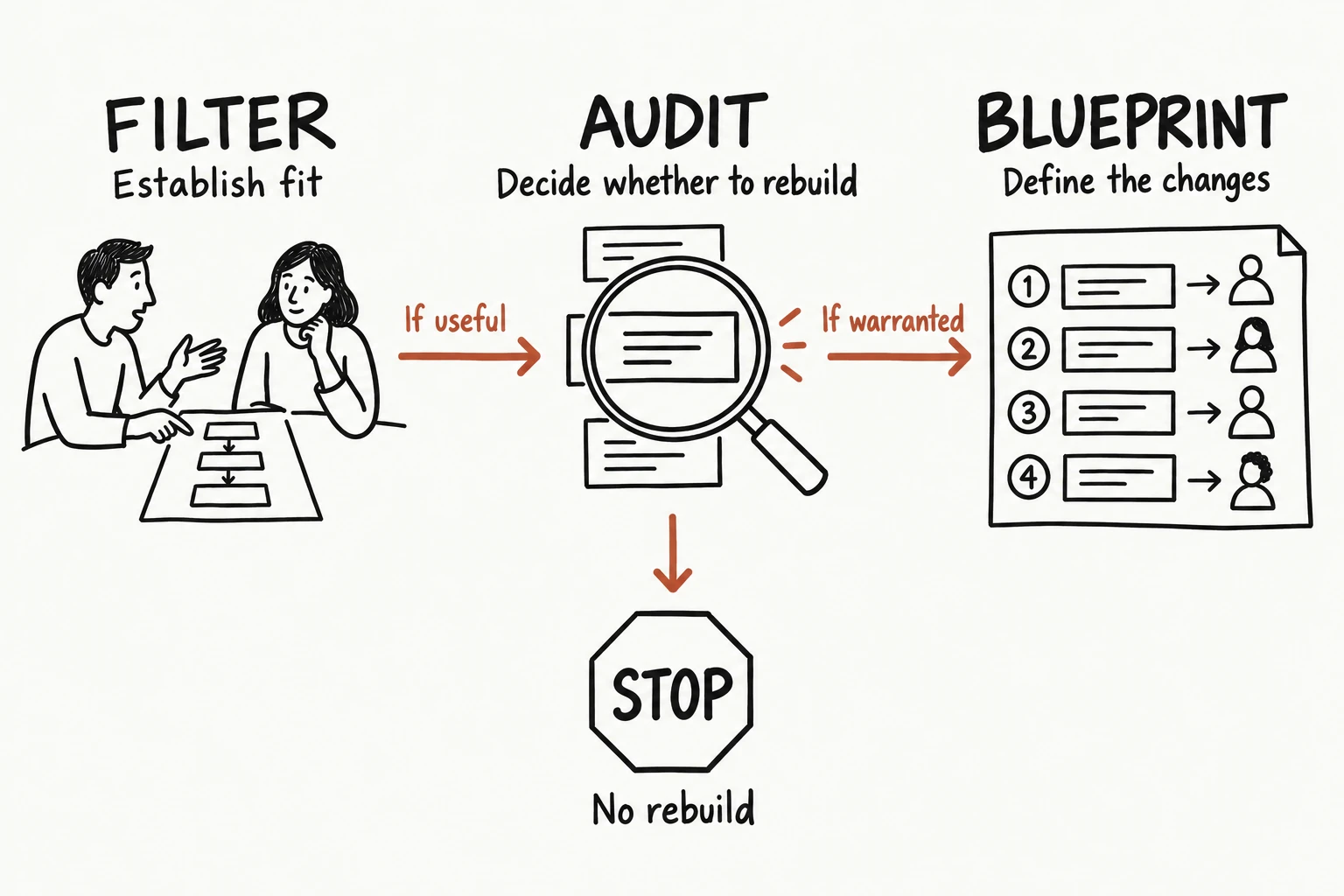
- Filter
- A free, 30-minute conversation about the operating problem and whether an Audit is useful.
- Audit
India starts from ₹1,00,000. US / Europe / UK starts from $5,000 (or €5,000 / £5,000).
For many MSMEs around ₹25 crore turnover, Audit is typically up to about ₹1,50,000.
Paid diagnosis: map the operating problem, define what to refuse, and decide whether a rebuild is warranted.
- Blueprint
India starts from ₹4,00,000. US / Europe / UK starts from $20,000 (or €20,000 / £20,000).
A separate paid engagement. Sequence changes across the work, its economics, and leadership into artifacts the team can use.
After Blueprint: Install puts the agreed design into daily operations. Train helps the team run it. Both are separate engagements; Train is productized.
Install: India from ₹8,00,000, scoped after Blueprint. US / Europe / UK from $40,000, scoped after Blueprint.
Filter call is free. Final fee depends on scale and complexity. Exact quote after Filter.
Start by establishing fit, access requirements, and the process in scope. Implementation depends on what the diagnosis reveals.
Before the filter call
What do the engagements cost?
Filter call is free. Final fee depends on scale and complexity. Exact quote after Filter. The Filter takes 30 minutes. Audit: India starts from ₹1,00,000. US / Europe / UK starts from $5,000 (or €5,000 / £5,000). For many MSMEs around ₹25 crore turnover, Audit is typically up to about ₹1,50,000. Blueprint: India starts from ₹4,00,000. US / Europe / UK starts from $20,000 (or €20,000 / £20,000). Install: India from ₹8,00,000, scoped after Blueprint. US / Europe / UK from $40,000, scoped after Blueprint. Each stage is a separate decision. Install and Train are separate later engagements; Train is productized and priced separately.
What should we bring to the filter call?
Bring one production process, the recurring constraint or interruption, its operating impact, and the person who owns the decision. The call establishes whether an Audit is a useful next step.
Is this an equipment or robotics purchase?
The starting point is operating redesign. Equipment procurement, controls engineering, and machine safety validation need their own defined responsibilities and specialist scope before implementation is agreed.
What if our main problem is operating knowledge?
Use a concrete process or exception to show where knowledge depends on a few people. The rebuild examines what must become explicit in the workflow, decisions, and training so the process can be operated consistently.
Are the use cases client results?
No. They describe situations to investigate. They are not case studies, measured improvements, or guarantees of a particular result.
Bring one process that needs to work differently.
Describe where it stalls, what that affects, and who owns the operating decision. Use the filter call to establish whether a rebuild is the right next step.
Request a 30-minute filter call